Rat Glue Trap Bulk Supplier: B2B Buying Guide
Looking for a rat glue trap bulk supplier? This B2B guide covers specs, board weights, packing, MOQ, shelf life, and trade-offs to help importers buy right.

TL;DR
- Specs that matter: standard board is 258 x 191 mm, available in 180 g to 230 g board weights, packed 50 or 100 pcs per carton. Shelf life exceeds 5 years in original sealed carton away from direct sunlight.
- Ordering reality: OEM/private label MOQ is 3,000 pcs per style, and trial mixed orders are accepted. That makes it practical to test two or three board weights before committing to a full container.
- Know the limits: glue traps are not suitable for damp floors or areas accessible to pets and children. They work best on clean, dry, indoor surfaces where rodents travel.
Background
Most importers who contact us about rat glue traps have already tried one or two suppliers. They have samples on the desk. Some boards are stiff and flat; others curl at the corners after a week in a warm warehouse. The glue either holds or it does not. The difference is rarely the price per piece. It is the board weight, the adhesive coat, and how the cartons survive a sea freight cycle.
Chengdu Gulda Glue Industry Co., Ltd. has been making adhesives since 2006. We started in Chengdu, added a branch factory in Kunming in 2008, and opened a Yiwu branch and showroom in the Yiwu International Trade Port in 2020. Over 20 years we have shipped to more than 50 export countries, mostly in Southeast Asia, Central Asia, South America, the Middle East, and Africa. Our product range covers eight lines, from instant adhesives to silicone sealants, and rodent glue traps sit alongside fly paper in the pest-control group.
This guide is written for importers, distributors, and private-label buyers who need to compare suppliers on facts, not brochures. We will go through the specification sheet, the trade-offs, and the questions we get asked most often. Where a number is not fixed by our production, we say so.
Core definition: what a rat glue trap bulk supplier actually supplies
A rat glue trap bulk supplier is a factory or trading company that ships rodent glue boards in cartons, pallets, or full containers to business buyers, not to retail consumers. In practice, the bulk supplier is responsible for four things: the board substrate, the pressure-sensitive adhesive coat, the attractant, and the export packing.
The substrate is usually a paper board or composite board. Our standard board size is 258 x 191 mm (10.16 x 7.52 in). Board weight options are 180 g, 205 g, 210 g, 220 g, and 230 g. Heavier board is stiffer and resists warping better in humid conditions, but it also adds freight weight. That trade-off matters when you are shipping a 40-foot container.
The adhesive is a solvent-free pressure-sensitive glue. It is non-toxic to humans and pets when used as directed, and it contains a food-grade attractant. The glue does not dry out quickly, which is why shelf life is more than 5 years in the original sealed carton, away from direct sunlight.
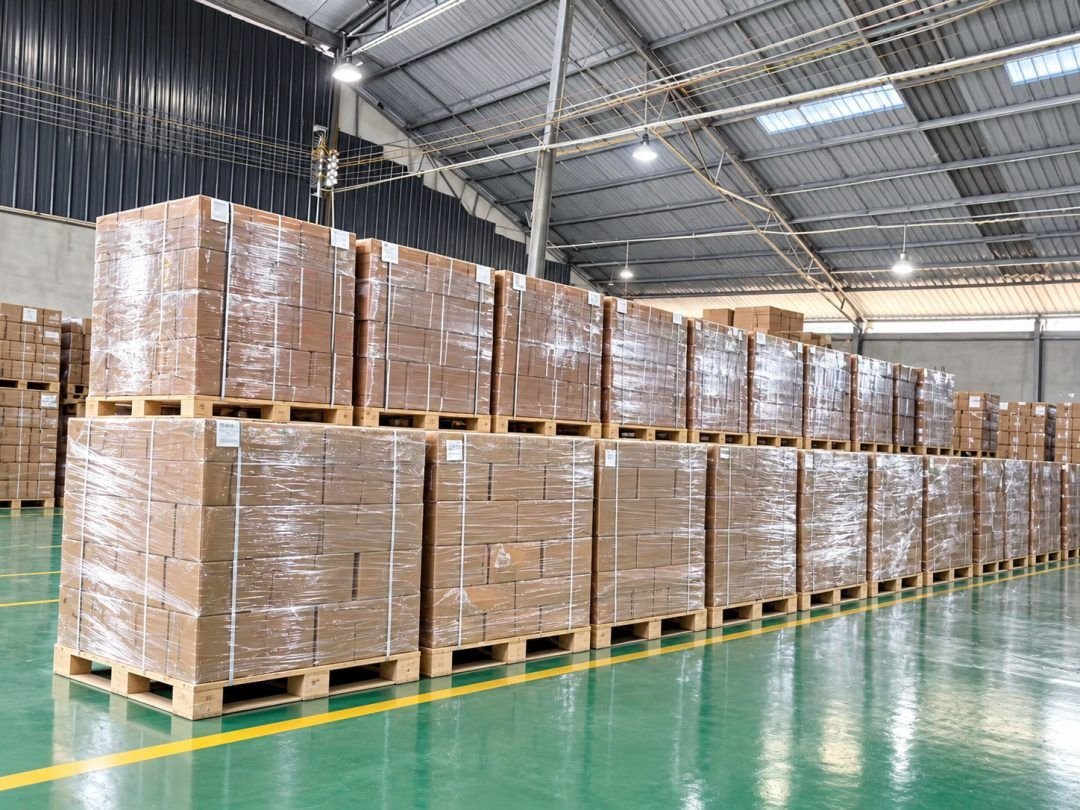
Packing is either 50 pcs per carton (carton 41.5 x 29 x 28 cm) or 100 pcs per carton (carton 52.5 x 40.5 x 27.7 cm). The 100-piece carton is more efficient per unit, but it is heavier to handle in a warehouse. Many distributors choose the 50-piece carton for retail-ready splits and the 100-piece carton for pallet deals.
For buyers who need their own brand, we offer OEM/private label with an MOQ of 3,000 pcs per style. Trial mixed orders are accepted, which lets you test board weights and packaging before scaling. You can see the standard range on our products page and the private-label process on our OEM/ODM page.
Deep dive 1: Board weight and board size — how to choose without overpaying
Board weight is the first specification buyers ask about, and the first one they get wrong. A 180 g board is light. It is fine for dry, warm indoor spaces and for markets where price per piece is the main driver. A 230 g board is stiff and holds its shape better when the ambient humidity swings. For coastal markets in Southeast Asia or the Gulf, the heavier board is usually the safer choice, even though it costs more per unit.
In most cases, the middle of the range — 205 g, 210 g, or 220 g — gives the best balance. These weights are stiff enough for normal warehouse and retail conditions without adding unnecessary freight cost. We typically recommend 210 g or 220 g for importers who are unsure, because it performs across a wider range of climates.
Board size is fixed at 258 x 191 mm for the standard product. That is a common size for rodent glue boards and fits most retail shelf plans. If you need a different size, that falls under OEM/private label and triggers the 3,000 pcs per style MOQ. In practice, most private-label buyers start from the standard size and change the printing, not the dimensions.
One more point on board weight: it is not a measure of glue quality. A heavy board with a thin glue coat will perform worse than a lighter board with a proper coat. When you evaluate samples, check both. Press a finger into the glue — it should feel tacky and consistent, not patchy. Leave a sample in a warm room for a week and see if the glue migrates or the board curls.
Deep dive 2: Adhesive, attractant, and shelf life — what the spec sheet does not tell you
Our adhesive is solvent-free and pressure-sensitive. That means it stays tacky without a solvent carrier, which is better for indoor use and for markets with stricter chemical regulations. It is non-toxic to humans and pets when used as directed. We include a food-grade attractant in the glue to improve capture rates.
The honest limitation: glue traps are not suitable for damp floors. Moisture, dust, and grease reduce tackiness quickly. On a wet concrete floor or in a humid basement, the glue can lose grip within days. For those environments, a bait station or a mechanical trap is usually a better fit. We tell buyers this upfront because a product that fails in the wrong environment creates returns and complaints.
Shelf life is more than 5 years in the original sealed carton, away from direct sunlight. That is a long window, but it depends on storage. A carton left in a hot container yard for months will age faster than one in a shaded warehouse. If you are holding stock for more than a year, rotate it and keep it out of direct sun.
The attractant is food-grade, but it is not a pesticide. The trap works by physical capture, not by poisoning. That matters for markets where poison-based rodenticides face restrictions, and for households with children or pets — though the trap itself must still be placed out of their reach.
Deep dive 3: Packing, MOQ, and export documentation — the part that decides your landed cost
Packing decisions affect freight more than most buyers expect. The 50-piece carton measures 41.5 x 29 x 28 cm. The 100-piece carton measures 52.5 x 40.5 x 27.7 cm. The 100-piece carton is more cube-efficient per unit, so it usually lowers the freight cost per piece. The trade-off is handling weight and the fact that you cannot split a carton for retail orders.
MOQ for OEM/private label is 3,000 pcs per style. Trial mixed orders are accepted, so you can combine styles or board weights in a first order. That is useful for distributors who want to test two or three SKUs before committing to a full container. For standard products, we can discuss smaller trial quantities case by case.
Export documentation is straightforward. We provide MSDS, MA/CMA third-party test reports, a business licence, a certificate of origin, and a CHTC quality management system certificate (ISO 9001). The HS code for adhesives is 3506.91 as a reference — always confirm the classification with your customs broker, because rodent glue traps can be classified differently depending on the importing country and the way the product is presented.
One practical note on cartons: ask for a carton sample before mass production. Humidity during sea freight can soften corrugated board. If your market is humid, specify a stronger flute or add a moisture barrier. This is a small cost that prevents crushed cartons on arrival.
FAQ
What is the MOQ for private label rat glue traps?
The MOQ for OEM/private label is 3,000 pcs per style. Trial mixed orders are accepted, so you can combine styles or board weights in one first order. For standard, unbranded products, we can discuss smaller trial quantities case by case.
How long do rat glue traps last in storage?
More than 5 years in the original sealed carton, away from direct sunlight. In practice, storage conditions matter. Keep cartons in a shaded, dry warehouse and rotate stock if you hold it for more than a year. Do not leave cartons in a hot container yard.
Can glue traps be used on damp floors or outdoors?
No. Glue traps are not suitable for damp floors or outdoor use. Moisture, dust, and grease reduce tackiness quickly. They work best on clean, dry, indoor surfaces where rodents travel. For damp or outdoor environments, a bait station or mechanical trap is usually a better fit.
What certifications and documents do you provide?
We provide MSDS, MA/CMA third-party test reports, a business licence, a certificate of origin, and a CHTC quality management system certificate (ISO 9001). The HS code for adhesives is 3506.91 as a reference — confirm the final classification with your customs broker.
What board weights and packing options are available?
Board weights are 180 g, 205 g, 210 g, 220 g, and 230 g. Standard board size is 258 x 191 mm (10.16 x 7.52 in). Packing is 50 pcs per carton (41.5 x 29 x 28 cm) or 100 pcs per carton (52.5 x 40.5 x 27.7 cm).
Buying recommendation
If you are sourcing rat glue traps in bulk for the first time, start with a mixed trial order. Choose two board weights — say 210 g and 230 g — and one packing format. Test them in your market for a few weeks. Check how the glue holds in your climate, how the cartons survive handling, and how the retail packaging looks on a shelf.
For established distributors, the 220 g board with 100-piece cartons is often the best balance of stiffness and freight efficiency. For private label, budget for the 3,000 pcs per style MOQ and plan your artwork early. If you need help matching a board weight to your market, our team can advise based on the climate and channel you sell into. Browse the standard range on our products page or review the private-label process on our OEM/ODM page.
Conclusion
A rat glue trap bulk supplier is not just a price per piece. It is board weight, adhesive quality, packing efficiency, and documentation that clears customs. The specifications in this guide — 258 x 191 mm board, 180 g to 230 g weights, 50 or 100 pcs per carton, 5+ year shelf life, 3,000 pcs MOQ — are the numbers that decide whether your order performs in the market. The trade-offs are real: glue traps are not for damp floors or areas accessible to pets and children. Choose the right board weight for your climate, test before you scale, and keep your documentation in order.
CTA
Ready to compare samples? Send us your target board weight, packing format, and estimated order quantity. We will confirm availability, lead time, and the documentation you need for your market. For private label, include your artwork requirements and we will walk you through the 3,000 pcs per style MOQ and the trial mixed order option. Visit our products page to see the full range, or contact our export team directly.