Glue Trap OEM Factory: A Buyer's Guide for Importers
A practical guide to sourcing from a glue trap OEM factory: board weights, packing, MOQ, private label steps and the limits of glue traps. Read before you order.

TL;DR
If you are an importer or distributor evaluating a glue trap OEM factory, three things decide whether the order works: the board weight you specify, the carton configuration you accept, and whether your market can live with the honest limits of a glue product.
- Board weight is the main cost and performance lever. Standard boards are 258 x 191 mm, available at 180 g, 205 g, 210 g, 220 g and 230 g. Lighter boards suit price-driven markets; heavier boards hold shape better in transit and under a struggling rodent.
- MOQ for OEM/private label is 3,000 pcs per style. Trial mixed orders are accepted, which matters if you want to test two or three board weights before committing to a container.
- Glue traps are not universal. They are not suitable for damp floors, dusty sites, or households with free-roaming pets and small children. A factory that tells you otherwise is selling you a returns problem.
Background: Why Buyers Keep Asking About Glue Trap OEM
Glue traps sit in an awkward category. They are cheap per unit, light to ship, and sell steadily in hardware stores, agricultural supply chains and household pest control. At the same time, they are a product where small differences in board weight and glue formulation show up fast in customer complaints.
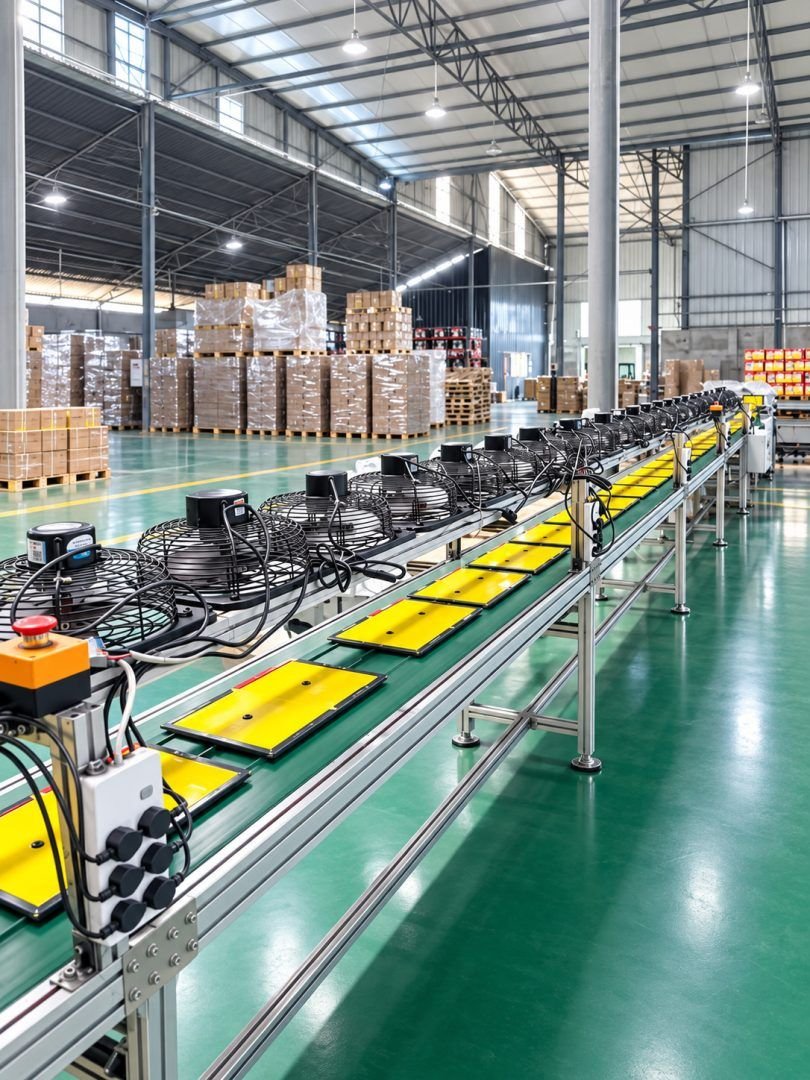
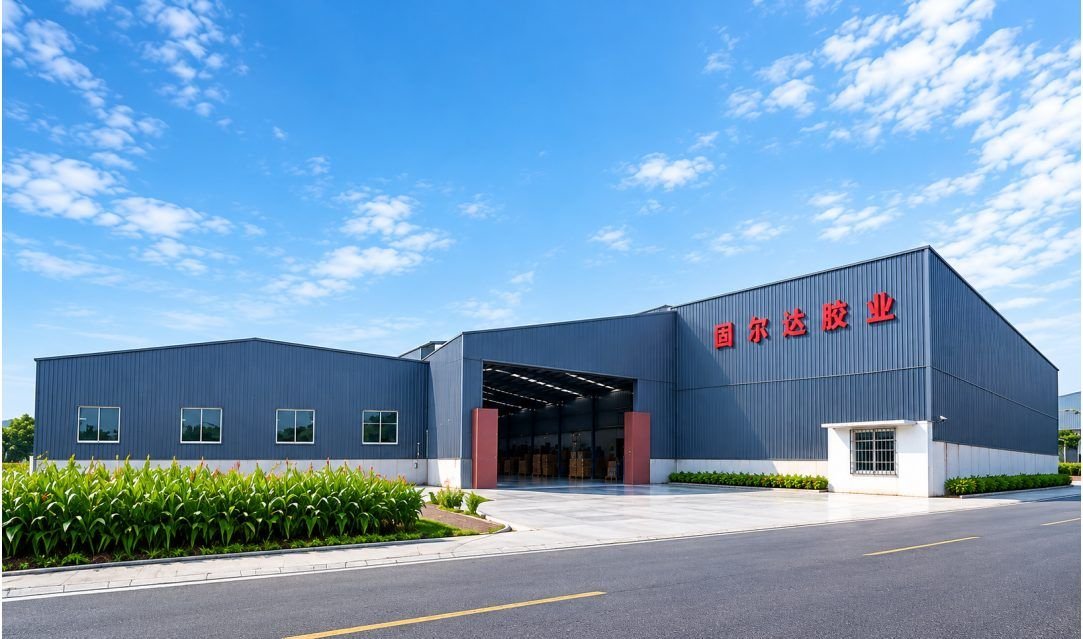
Chengdu Gulda Glue Industry Co., Ltd. has been making adhesives since 2006, with a branch factory in Kunming from 2008 and a Yiwu branch and showroom in Yiwu International Trade Port from 2020. We run 30+ units of production equipment across 8 product lines, and we export to 50+ countries, mostly Southeast Asia, Central Asia, South America, the Middle East and Africa. Mouse glue traps and fly paper are two of those lines.
That background matters for one reason. A glue trap is an adhesive product before it is a cardboard product. Factories that buy glue on the open market and coat boards on a converted line tend to have more batch variation than factories that formulate their own adhesive. We formulate ours, which is why we can talk about solvent-free pressure-sensitive glue and a food-grade attractant without hedging.
What we cannot do is pretend the product is something it is not. Glue traps work well in dry, sheltered, indoor spaces. They perform poorly on wet concrete, in flour-dust-heavy food storage areas, and anywhere a trap can be dragged by a pet or reached by a toddler. Buyers who understand this from the start tend to reorder. Buyers who buy on price alone and discover it in the market tend not to.
Core Definition: What a Glue Trap OEM Factory Actually Does
A glue trap OEM factory manufactures mouse glue boards to a buyer's specification and applies the buyer's brand, rather than selling only a house brand. In practice the OEM scope covers four decisions:
- Board weight and size. The standard board is 258 x 191 mm (10.16 x 7.52 in). Weight options are 180 g, 205 g, 210 g, 220 g and 230 g.
- Glue and attractant. Ours is a solvent-free pressure-sensitive adhesive with a food-grade attractant, non-toxic to humans and pets when used as directed.
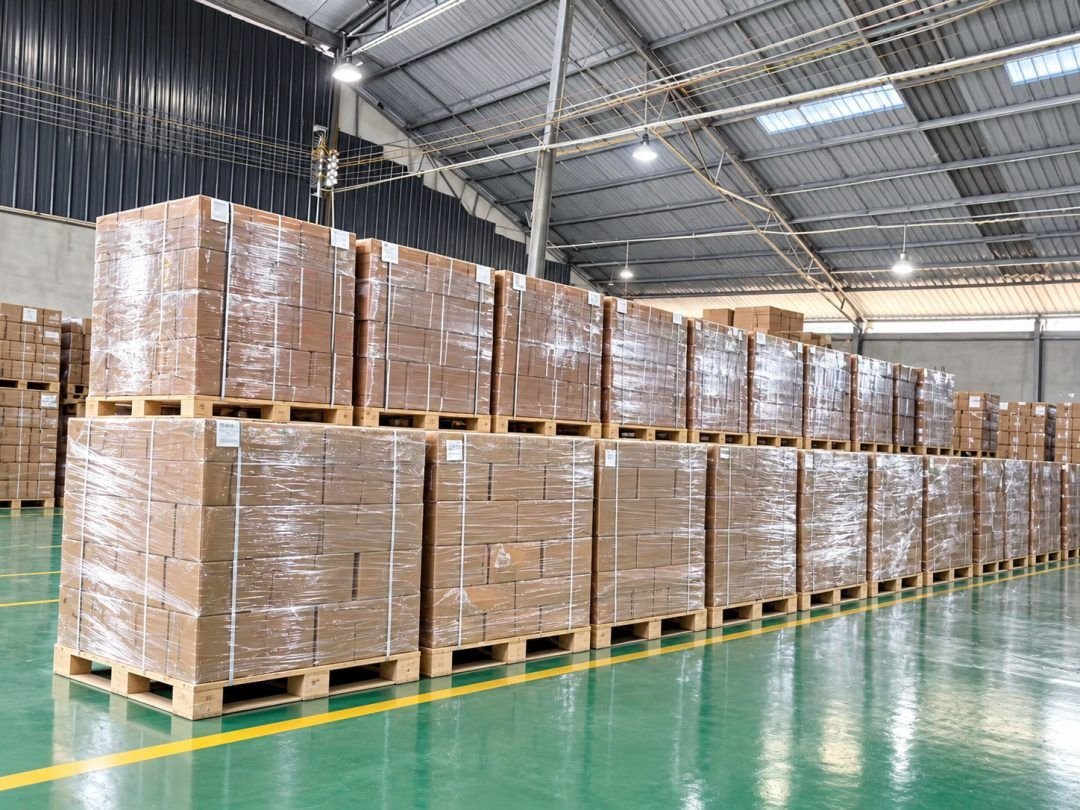
- Packing. 50 pcs per carton (carton 41.5 x 29 x 28 cm) or 100 pcs per carton (carton 52.5 x 40.5 x 27.7 cm).
- Branding. Printed board, printed sleeve, printed carton, or a combination, depending on what your retail channel expects.
OEM is not the same as ODM. If you already have artwork and a spec, you are buying OEM. If you want us to adapt an existing board format or packaging concept to your market, that is closer to ODM and usually needs a longer sampling cycle. Both are possible. The distinction mainly affects how much design work sits on your side before the first production run.
One practical note on classification: mouse glue traps are typically declared under HS code 3506.91 as adhesives. Treat that as a reference point only and confirm the code with your own customs broker, because treatment varies by destination and by how the product is presented.
Deep Dive 1: Board Weight, Glue and the Trade-offs You Are Actually Buying
Board weight is where most sourcing conversations should start, and where many of them quietly go wrong.
A 180 g board is a thin, flexible board. It coats evenly, stacks tightly, and keeps unit cost down. In a dry indoor corner it does the job. In a humid warehouse or a rough truck journey it can warp, and a warped board does not sit flat on the floor, which is exactly where a mouse approaches it.
A 230 g board is stiffer. It lies flatter, resists curling at the edges, and generally presents a more stable glue surface. It also costs more per unit and weighs more per carton, which changes your freight math. The middle grades (205 g, 210 g, 220 g) exist because most distributors do not want either extreme. They want a board that survives the supply chain without paying for stiffness nobody in their market will notice.
Our advice, after enough orders to have seen the pattern: match the board to the channel, not to the catalogue. Discount retail and agricultural supply stores typically absorb a lighter board. Hardware chains and pest control distributors, where the end user reads the pack, in most cases justify the heavier grade.
On the glue side, the honest points are these. Solvent-free pressure-sensitive adhesive is non-toxic to humans and pets when used as directed, and it stays tacky across a long shelf life. Shelf life is more than 5 years in the original sealed carton, kept away from direct sunlight. That is a real advantage for importers holding stock, but it assumes the carton stays sealed and shaded. A pallet left on a sunlit loading dock for a week is not covered by that number.
Temperature is the other variable. Pressure-sensitive adhesives soften in heat and stiffen in cold. In very hot climates, boards stored in unventilated containers can become more fluid than intended. In cold storage they may need time at room temperature before use. Neither is a defect; both are physics, and your packaging copy should say so.
If you want to compare formats across our range, the product pages under our products list the current glue trap and fly paper configurations.
Deep Dive 2: Carton Configuration, MOQ and Private Label Workflow
Packing looks like an afterthought and behaves like a cost centre.
The 50-piece carton (41.5 x 29 x 28 cm) suits distributors who sell in smaller lots, break cartons at the warehouse, or supply retail shelves that cannot absorb 100 units at a time. The 100-piece carton (52.5 x 40.5 x 27.7 cm) reduces handling per unit and usually improves container utilisation, but it raises the minimum a sub-distributor must take and makes the carton harder to handle manually.
There is no universally correct answer. In practice, markets with fragmented retail take the 50-piece carton; markets with consolidated retail and larger storage take the 100-piece. Some buyers split the order across both, which is possible within a trial mixed order.
MOQ for OEM and private label is 3,000 pcs per style. That is per style, not per order, which matters if you plan a range: three board weights with three different printed designs is three styles. Trial mixed orders are accepted, so a first shipment can combine several styles at lower total volume than a full private-label commitment. Use that to test which board weight sells before you print a container load of cartons.
The private label workflow, in the order it usually happens:
- Specification. You confirm board weight, board size, glue type, packing count and carton marking.
- Artwork. You supply print-ready files for the board, sleeve or carton. We flag anything that will not reproduce cleanly on the substrate.
- Sample. A pre-production sample is made against your spec and artwork. Approve it in writing.
- Production. Boards are coated, cut, packed and cartoned to the approved sample.
- Documents. MSDS, certificate of origin, business licence and third-party test reports are prepared alongside production.
- Shipment. Loading photos and carton marks confirmed before the container leaves.
On documentation: we hold a CHTC quality management system certificate (ISO 9001), and we supply MSDS, MA/CMA third-party test reports, business licence and certificate of origin. We do not invent certifications we do not have. If your market requires a specific registration we do not hold, we will tell you rather than promise it.
The full OEM/ODM scope, including what we can and cannot adapt, is set out on the OEM/ODM page.
Deep Dive 3: Where Glue Traps Fail, and How to Write Copy That Does Not
This is the section most suppliers skip. It is also the section that protects your repeat business.
Glue traps are a dry-surface, sheltered-space product. They work on floors, along walls, under shelving and in corners where rodents travel. They do not work well in the following conditions:
- Damp floors. Wet concrete, leaking pipe runs and wash-down areas degrade the adhesive surface and let the board curl. A glue trap on a damp floor is a wasted trap.
- Dusty environments. Flour mills, feed stores and construction sites coat the glue with dust within hours. The board looks fine and catches nothing.
- Outdoors without shelter. Rain, direct sun and wind-blown debris all compromise the product. Sheltered outbuildings are fine; open ground is not.
- Households with free-roaming pets or small children. This is a safety limitation, not a performance one. The adhesive is non-toxic to humans and pets when used as directed, but a trapped animal or a child's hand in the glue is a distressing experience regardless of toxicity. Traps belong where pets and children cannot reach them.
A factory that markets glue traps as universal is setting up its buyers for complaint tickets. Our position is that the product should be sold with placement guidance on the pack: dry surface, along a wall, sheltered, out of reach.
There is also a humane dimension that varies by market. Some buyers want a board that holds firmly; others want a format that lets the end user dispose of the trap quickly. Glue traps are lethal or near-lethal in practice, and your packaging should be honest about that. In several markets, retail chains now ask for explicit handling and disposal instructions on pack. Build that into your artwork from the first draft rather than adding a sticker later.
On attractant: our adhesive contains a food-grade attractant. It helps, but it does not overcome a badly placed trap. Placement guidance on the pack does more for customer satisfaction than any formulation tweak.
FAQ
What is the MOQ for private label glue traps?
3,000 pcs per style for OEM and private label. Trial mixed orders are accepted, so a first shipment can combine several styles. Remember that styles are counted separately: a different board weight with different printed artwork is a separate style.
What board weights can I order?
Standard board size is 258 x 191 mm (10.16 x 7.52 in), available at 180 g, 205 g, 210 g, 220 g and 230 g. Lighter boards suit price-sensitive channels; heavier boards sit flatter and hold up better in transit.
How are the traps packed and how long do they last?
50 pcs per carton (41.5 x 29 x 28 cm) or 100 pcs per carton (52.5 x 40.5 x 27.7 cm). Shelf life is more than 5 years in the original sealed carton, away from direct sunlight. Heat and humidity shorten that in practice.
Are the traps safe around children and pets?
The adhesive is solvent-free and non-toxic to humans and pets when used as directed. That does not make the trap safe to place within reach. Traps should be positioned where children and free-roaming pets cannot contact them.
Which HS code applies, and what documents do you provide?
Mouse glue traps are typically referenced under HS code 3506.91 as adhesives. Confirm this with your own customs broker. We provide MSDS, MA/CMA third-party test reports, business licence, certificate of origin, and we hold a CHTC quality management system certificate (ISO 9001).
Buying Recommendation
If you are ordering glue traps for the first time, order a mixed trial. Pick two board weights, say 205 g and 230 g, in the 50-piece carton, and put them into your two most different sales channels. Watch which one generates complaints and which one generates reorders. Then commit.
If you already know your market, the decision is usually simpler. Price-led retail in hot, humid regions: middle weight, 50-piece carton, clear placement guidance on pack. Hardware and pest control distribution in temperate markets: 220 g or 230 g, 100-piece carton, fuller on-pack instructions.
A word on suppliers. Ask any glue trap OEM factory three questions before you place an order: do you formulate your own adhesive, what is your board weight tolerance, and what does your product not do. The first tells you about batch consistency. The second tells you whether the 210 g you ordered is actually 210 g. The third tells you whether you are dealing with a manufacturer or a trader with a catalogue. The answers are more useful than a price list.
We would also suggest asking for the MSDS before the quotation, not after. If a supplier hesitates on that, the conversation is over.
Conclusion
Glue traps are a simple product with a narrow set of conditions where they work well. A good OEM relationship is mostly about matching the board, the carton and the packaging copy to those conditions, and being honest about the rest. Board weight from 180 g to 230 g, two carton configurations, a 3,000 pcs per style MOQ with trial mixed orders, and a shelf life beyond 5 years in sealed cartons are the levers you have. Use them deliberately rather than defaulting to the cheapest quote.
The limits are real: no damp floors, no dusty sites, no open access for pets or children, and no outdoor exposure without shelter. A supplier who says otherwise is not doing you a favour.
CTA
If you are planning a glue trap order and want to test board weights before committing, send us your target market, channel and estimated annual volume. We will come back with a specification proposal, a mixed trial order option and the documentation pack (MSDS, MA/CMA test reports, certificate of origin). Start with the product range or go straight to OEM/ODM enquiries. We will tell you if your spec will not work in your market, and why.