Rat Glue Board Manufacturer: The Complete B2B Buying Guide for Importers
Looking for a reliable rat glue board manufacturer? This guide covers specs, board weights, MOQ, OEM options, and what to verify before you import. Get the full factory checklist.

TL;DR
- Board weight is the main cost and performance lever. A 180 g board suits budget retail; 230 g boards are stiffer and better for professional pest control. Match weight to your market, not to the lowest price.
- MOQ for private label is 3,000 pcs per style, with trial mixed orders accepted. Standard packing is 50 pcs per carton (41.5 x 29 x 28 cm) or 100 pcs per carton (52.5 x 40.5 x 27.7 cm).
- Glue traps work best on clean, dry, flat surfaces and are not suitable for damp floors or areas accessible to pets and children. Confirm your target market's regulations and always test a sample batch before committing to a full order.
Background
Sourcing rodent control products from overseas is rarely just about price. Importers and distributors need a supplier who can deliver consistent board weight, reliable adhesive performance, and packaging that survives a long sea freight. The rat glue board category—often called mouse glue traps or rodent glue boards—is especially sensitive to these factors because the product is low-cost per unit but high-volume, and a failed batch can damage your reputation with retailers.
Chengdu Gulda Glue Industry Co., Ltd. (brand GULDA) has been manufacturing adhesives and glue traps since 2006. We operate a branch factory in Kunming (since 2008) and a branch and showroom in Yiwu International Trade Port (since 2020). Over 20 years we have exported to more than 50 countries across Southeast Asia, Central Asia, South America, the Middle East, and Africa. Our product range includes instant adhesives, super glue, shoe repair adhesives, aluminium-tube adhesives, epoxy AB adhesives, mouse glue traps, fly paper, and silicone sealants—eight product lines in total, supported by 30+ units of production equipment. We hold a CHTC quality management system certificate (ISO 9001), and we can supply MSDS, MA/CMA third-party test reports, business licence, and certificate of origin for each shipment.
This guide is written for importers and distributors who want a clear, honest picture of what a rat glue board manufacturer can and cannot do. We will cover specifications, trade-offs, and the questions you should ask any supplier—including us.
Core Definition: What a Rat Glue Board Manufacturer Actually Produces
A rat glue board is a flat board coated with a pressure-sensitive adhesive that traps rodents on contact. The board is typically made of cardboard or paperboard, and the adhesive is covered with a release liner or folded so that the glue surfaces face inward until the user opens it. The product is designed for indoor use in areas where rodents travel—along walls, behind appliances, in warehouses, and in food storage areas.
At GULDA, our standard board size is 258 x 191 mm (10.16 x 7.52 in). We offer board weights of 180 g, 205 g, 210 g, 220 g, and 230 g. The adhesive is a solvent-free pressure-sensitive glue, non-toxic to humans and pets when used as directed, and contains a food-grade attractant. Shelf life is more than 5 years in the original sealed carton, away from direct sunlight. Packing options are 50 pcs per carton (41.5 x 29 x 28 cm) or 100 pcs per carton (52.5 x 40.5 x 27.7 cm). For OEM/private label, the MOQ is 3,000 pcs per style, and we accept trial mixed orders.
In practice, a manufacturer's job is not just to coat glue on board. It is to control adhesive viscosity, coating weight, and curing so that the board performs consistently across different temperatures and humidity levels. That is where experience matters—and where you should focus your supplier audit.
Deep Dive 1: Board Weight and Adhesive Performance
Board weight is the first specification most buyers ask about, and for good reason. It affects stiffness, glue retention, and cost. A 180 g board is lighter and more flexible; it suits budget-oriented retail packs where the board is sold in a flat, folded format. A 230 g board is stiffer and holds its shape better when placed on uneven surfaces, which is why professional pest control distributors often prefer heavier boards.
The trade-off is straightforward: heavier boards cost more to produce and ship. If your market is price-sensitive, a 180 g or 205 g board may be the right choice. If your customers are professional exterminators or industrial buyers, a 220 g or 230 g board is typically more appropriate. We recommend ordering samples of two or three weights and testing them in your target environment before you commit to a full container.
Adhesive performance is harder to see from a spec sheet. Our solvent-free pressure-sensitive glue is formulated to stay tacky over a wide temperature range, but no glue trap performs well on a dirty or damp surface. Dust, moisture, and oil reduce tack. In most cases, end users should clean and dry the surface before placing the board. This is a limitation of the product category, not a defect—but it means your packaging instructions should be clear and localised.
The food-grade attractant in our adhesive is another point to verify. Some markets have specific labelling requirements for attractants, and you should confirm with your local regulatory advisor. We can provide MSDS and MA/CMA third-party test reports to support your registration process.
Deep Dive 2: Packing, Carton Configuration, and Shipping Efficiency
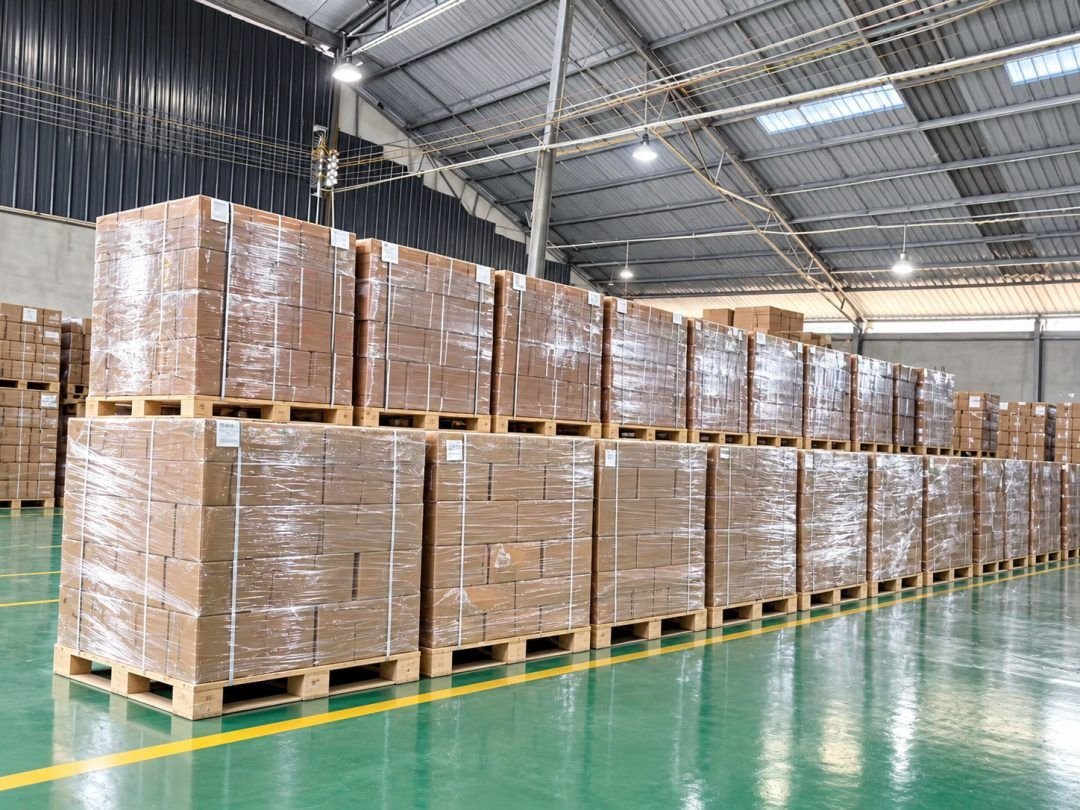
Packing configuration directly affects your landed cost. A 50-piece carton (41.5 x 29 x 28 cm) is easier to handle and suits smaller distributors or retail-ready displays. A 100-piece carton (52.5 x 40.5 x 27.7 cm) reduces packaging material per unit and is more efficient for full-container loads, but it is heavier and may require manual handling equipment.
We recommend calculating your carton count per pallet and per container before you finalise the order. The difference between 50-piece and 100-piece cartons can be significant in container utilisation, especially if you are mixing other products from our range—such as fly paper or silicone sealants—in the same shipment. As a reference, the HS code for adhesives is 3506.91, but you should confirm the correct classification with your customs broker, as rodent control products may be classified differently in some countries.
Another practical point: shelf life. Our boards have a shelf life of more than 5 years in the original sealed carton, away from direct sunlight. That is a long window, but it assumes proper storage. If your warehouse is hot or humid, or if cartons are stored in direct sunlight, the adhesive can degrade faster. In practice, you should rotate stock and keep cartons off concrete floors in damp climates.
For OEM/private label orders, we can customise the carton artwork, board printing, and instruction leaflet. The MOQ is 3,000 pcs per style, and we accept trial mixed orders so you can test several styles before scaling up. You can see our standard product range at /products/ and our OEM/ODM capabilities at /oem-odm/.
Deep Dive 3: Quality Control, Certifications, and Supplier Verification
When you evaluate a rat glue board manufacturer, certifications are a starting point, not a guarantee. We hold a CHTC quality management system certificate (ISO 9001), and we can provide MSDS, MA/CMA third-party test reports, business licence, and certificate of origin. These documents are useful for customs clearance and for your own compliance files. But they do not tell you whether the adhesive on board number 10,000 is as tacky as the one on board number 1.
That is why we recommend a three-step verification process. First, request a pre-production sample from the actual production line, not a hand-made sample. Second, ask for a video of the coating and cutting process, or arrange a third-party inspection during production. Third, test the finished boards in your market—ideally in the conditions your customers will use them. We have seen cases where a board performs well in a Sichuan summer but fails in a dry, cold warehouse in Central Asia. The glue is the same; the environment is not.
Another factor is equipment. With 30+ units of production equipment across our Chengdu and Kunming factories, we can control coating weight and curing time more consistently than factories that rely on a single line. But equipment is only as good as the operators and the quality system behind it. Ask your supplier how they calibrate coating weight and how often they test adhesive tack. If they cannot answer clearly, that is a red flag.
Finally, consider the trade-offs of the product itself. Glue traps are not suitable for damp floors, for outdoor use in rain, or for areas accessible to pets and children. They are also not a substitute for professional pest control in severe infestations. A good manufacturer will tell you this upfront. If a supplier claims their board works everywhere, they are either inexperienced or not being honest.
FAQ
What is the MOQ for private label rat glue boards?
The MOQ for OEM/private label is 3,000 pcs per style. We also accept trial mixed orders, so you can combine several styles or board weights in one order to test your market before committing to larger volumes. For standard GULDA-branded products, the MOQ may be lower—contact us for details.
What board weights do you offer, and which should I choose?
We offer 180 g, 205 g, 210 g, 220 g, and 230 g boards. In practice, 180–205 g boards suit budget retail and price-sensitive markets. 220–230 g boards are stiffer and typically preferred by professional pest control distributors and industrial buyers. We recommend testing two or three weights in your target market before choosing.
How long is the shelf life, and how should I store the boards?
Shelf life is more than 5 years in the original sealed carton, away from direct sunlight. Store cartons in a cool, dry place, off concrete floors in humid climates, and rotate stock. Do not expose boards to direct sunlight or high heat, as this can reduce adhesive performance.
Can you provide MSDS and test reports for customs clearance?
Yes. We can supply MSDS, MA/CMA third-party test reports, business licence, and certificate of origin. We also hold a CHTC quality management system certificate (ISO 9001). For specific market requirements, please tell us your destination country and we will confirm which documents we can provide.
Are your glue traps safe around pets and children?
The adhesive is non-toxic to humans and pets when used as directed, and it contains a food-grade attractant. However, glue traps should not be placed in areas accessible to pets or children. If a pet or child contacts the glue, consult a medical or veterinary professional. Always read and follow the instructions on the packaging.
Buying Recommendation
Based on our experience supplying importers and distributors across 50+ countries, here is a practical buying approach for rat glue boards.
- Start with a sample order. Request samples of two board weights (e.g., 205 g and 230 g) and test them in your market. Pay attention to tackiness, board stiffness, and how the release liner performs.
- Match packing to your channel. If you sell to small retailers, 50-piece cartons may be easier to handle. If you supply large distributors or industrial clients, 100-piece cartons reduce packaging waste and improve container efficiency.
- Verify documents before you order. Ask for MSDS, MA/CMA test reports, and a certificate of origin. Confirm the HS code with your customs broker—3506.91 is a common reference, but not universal.
- Plan for storage. Glue boards have a long shelf life, but they are not indestructible. Ensure your warehouse is dry and away from direct sunlight.
- Be honest with your customers about limitations. Glue traps work best on clean, dry, flat surfaces. They are not suitable for damp floors or areas accessible to pets and children. Clear instructions reduce complaints and returns.
If you are comparing suppliers, ask each one the same five questions: What is your coating weight tolerance? How do you test adhesive tack? What is your MOQ for private label? Can you provide MSDS and test reports? What is your lead time for a mixed order? The answers will tell you more than any brochure.
Conclusion
Choosing a rat glue board manufacturer is a balance of specification, price, and reliability. The product itself is simple, but the variables—board weight, adhesive formulation, packing, shelf life, and documentation—are what determine whether your shipment sells through or sits in the warehouse. We have been making glue traps since 2006, and we have learned that the best buyers are the ones who test, ask questions, and plan for the limitations as well as the benefits.
At GULDA, we are happy to send samples, share test reports, and discuss your market requirements. We will also tell you when a product is not right for your conditions. That is what a long-term supplier relationship looks like.
CTA
Ready to evaluate rat glue boards for your market? Contact our export team to request a sample pack, discuss board weights and packing options, or get a quote for a trial mixed order. Visit /products/ to see our full range, or /oem-odm/ to learn about private label options. We typically respond within one business day.