How Long Do Mouse Glue Traps Last? Shelf Life, Heat and Humidity
Shelf life is more than five years in a sealed carton — but heat, sunlight and humidity decide whether that number survives the trip. Here is what actually degrades a glue board.
TL;DR
- Our boards carry a shelf life above five years when the sealed carton is stored dry and out of direct sunlight.
- The two things that shorten that life are heat above roughly 45 °C and ultraviolet light.
- Once the carton is opened, plan on using the boards within a season — dust and humidity do the damage, not the glue itself.
- A board that has been through a hot container is not necessarily ruined, but its tack should be checked before it is sold.
What "shelf life" actually measures
Shelf life is the period during which the adhesive still has enough tack to hold a rodent of the target size. It is not an expiry date in the food sense — a six-year-old board will still be sticky, just less so, and a board stored badly for six months can be worse than a board stored well for four years.
In practice we measure it by holding retention: place a standard test weight on the board at 23 °C and record how long it takes to release. When retention falls below the internal threshold, the batch is no longer saleable as first-grade stock.
Heat is the main enemy
A container sitting on a dock in Jebel Ali in August will exceed 60 °C inside. That is well above the point where a pressure-sensitive adhesive starts to soften and migrate. Two consequences:
- The glue can flow toward the low edge of the board, leaving one end thin.
- The release film can bond to the glue, so the board tears when the user opens it.
This is why we recommend the heavier 220 g and 230 g boards for Middle East and West African routes, and why we avoid shipping light boards in July and August where the schedule allows. A thicker glue layer tolerates heat migration better because there is more material to lose.
Humidity and the carton
The board itself is paper. In a humid warehouse — Lagos in the rainy season, Ho Chi Minh City year-round — an unsealed carton takes on moisture, the board softens, and the board can warp enough that it no longer sits flat on the floor. A warped board is a complaint, even though the glue is fine.
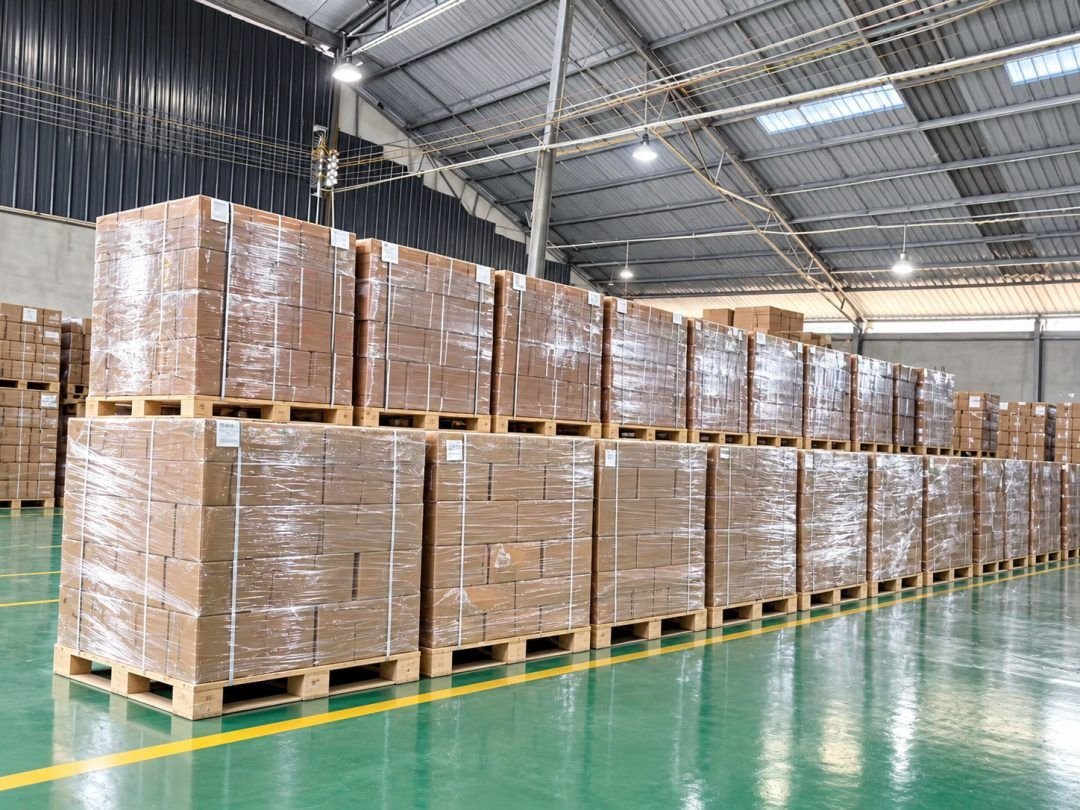
Our answer is a sealed carton with an inner liner, and one instruction to the distributor: do not break the carton seal until the stock is ready to sell. Repack into smaller units only in a dry room, and never store opened cartons on a concrete floor.
Ultraviolet light
Sunlight degrades the adhesive surface within weeks. A board displayed in a shop window will look fine and fail on the first mouse. If your retail customers insist on window display, give them a dummy carton and keep the stock inside.
What to do with old stock
Test before you discount. Take three boards from the batch, place them on a clean dry floor in a normal room, and check the surface with a finger. If the glue pulls a thread and the release film comes away cleanly, the batch is fine. If the film tears or the surface feels dry, sell it as a second-grade line with a clear warning, or return it to us with the batch number — we print a batch code on every carton for exactly this reason.
A note on cold
Cold is the opposite problem and it is less damaging. A board that has been stored below freezing will be stiff when it comes out of the carton. Let it reach room temperature for an hour before use. Do not warm it with a heater or hot water — that drives the glue into the paper.