Glue Trap Supplier China: A Practical B2B Buying Guide
How to choose a glue trap supplier in China: board weights, carton counts, MOQ for private label, shelf life and the limits of glue traps. Read the guide, then request a quote.

TL;DR
- Glue traps are a simple product, so the supplier decision usually comes down to board weight consistency, glue quality and packing accuracy rather than brand. Standard board size from our factory is 258 x 191 mm, available in 180 g, 205 g, 210 g, 220 g and 230 g board weights.
- A factory with a long export record typically handles the boring parts better: sealed cartons, stable adhesive batches, correct carton counts (50 pcs or 100 pcs per carton) and paperwork such as MSDS and third-party test reports.
- Glue traps are not a universal solution. In practice they fail on damp or dusty floors, and they must never be placed within reach of children or pets. A supplier who admits this is usually easier to work with than one who promises everything.
If you are comparing quotes from several Chinese suppliers, the sections below explain what to ask, what to check on a sample, and where the real cost differences hide. For product specs and packing details, see our glue trap product page; for private label terms, see OEM and ODM service.
Background: why so many importers buy glue traps from China
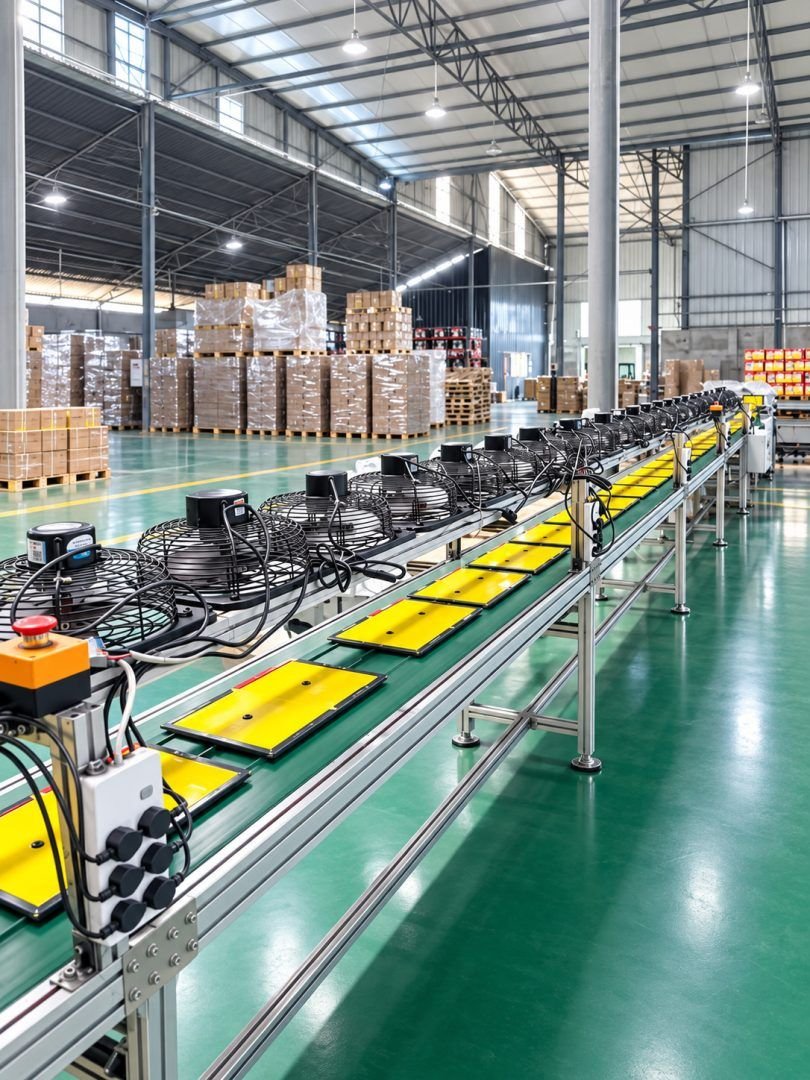
Glue traps are a mature, low-tech product. There is no electronics, no moving parts, no battery. That is exactly why the category migrated to China early and stayed there. The manufacturing is basically board converting, adhesive formulation and carton packing, and Chinese factories in Sichuan and the surrounding region have been doing all three at scale for a long time.
Chengdu Gulda Glue Industry Co., Ltd. was founded in 2006, with a branch factory in Kunming from 2008 and a Yiwu branch and showroom in Yiwu International Trade Port from 2020. We run more than 30 units of production equipment across 8 product lines, and we ship to more than 50 export countries, mostly in Southeast Asia, Central Asia, South America, the Middle East and Africa. Glue traps sit alongside instant adhesives, shoe repair adhesives, epoxy AB adhesives, fly paper and silicone sealants in our range, which matters for buyers who want to consolidate several adhesive items in one container.
The catch for a first-time importer is that the market is crowded. Many trading companies list glue traps without owning the coating line, and many small workshops own a line but cannot produce consistent paperwork. The result is that two quotes for what looks like the same product can differ by a wide margin, and the difference is not always visible in the unit price.
Core definition: what a glue trap actually is, from a factory's point of view
A glue trap is a rigid or semi-rigid board coated with a pressure-sensitive adhesive layer, usually with a food-grade attractant blended in, and packed so the glue stays clean until the end user opens it. That is the whole product. The engineering is in three places: the board, the glue and the packing.
The board carries the glue and must stay flat. Standard size from our line is 258 x 191 mm, which is roughly 10.16 x 7.52 inches. Board weight options are 180 g, 205 g, 210 g, 220 g and 230 g. Heavier board resists warping better when the glue is applied and holds shape better on uneven floors. Lighter board costs less and is fine for many markets, but in practice it is more sensitive to humidity during shipping.
The glue is a solvent-free pressure-sensitive adhesive. We describe it as non-toxic to humans and pets when used as directed, and it contains a food-grade attractant. Solvent-free matters for two reasons: there is no solvent smell to argue about in a container, and the adhesive does not dry out as fast, which is part of why shelf life is more than 5 years in the original sealed carton, away from direct sunlight.
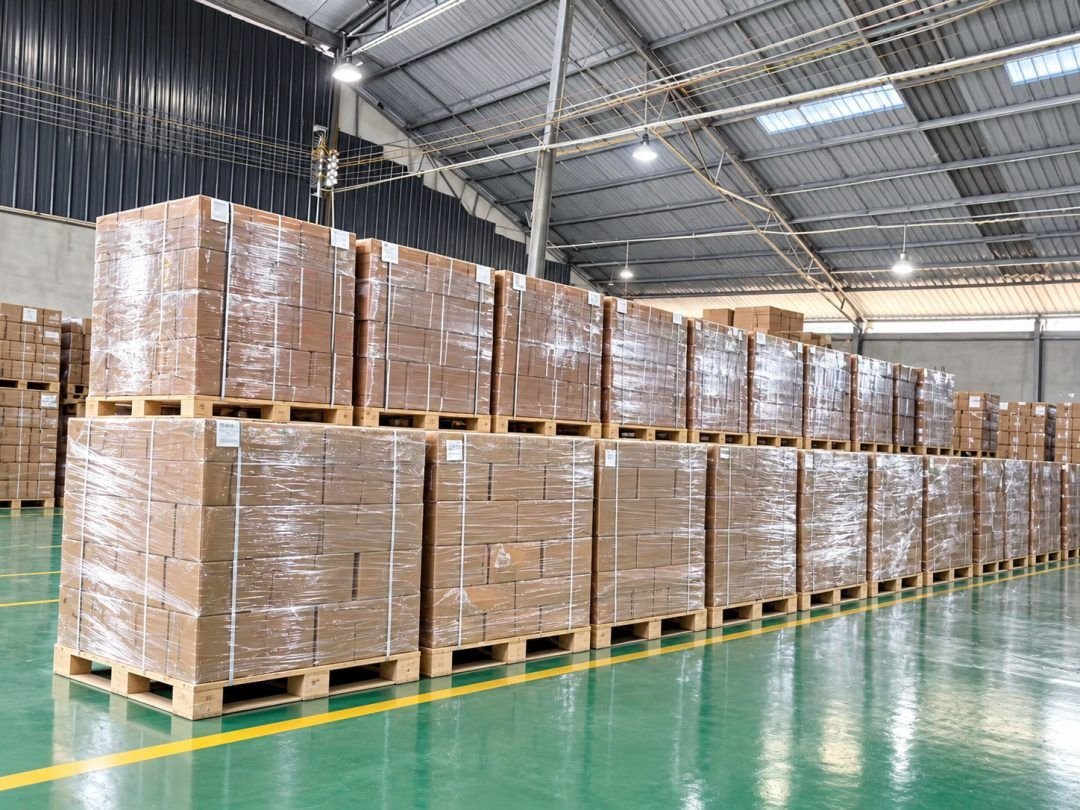
Packing is the third leg. We ship 50 pcs per carton (carton 41.5 x 29 x 28 cm) or 100 pcs per carton (carton 52.5 x 40.5 x 27.7 cm). Those are the two standard configurations. If your warehouse or retail partner needs a different count, that is a private label conversation, not a catalogue one.
Deep dive 1: board weight and glue — where the real cost difference lives
When a buyer sends us a competitor's quote that is noticeably cheaper, the explanation is usually one of two things: lighter board or thinner glue coat. Both are legal. Both change the product.
Board weight is the easier variable to discuss. A 180 g board and a 230 g board can look identical in a photo and feel very different in the hand. For dry, indoor use on a hard flat floor, 180 g and 205 g boards do the job in most cases. For humid climates, for rough concrete, or for markets where the end user is likely to fold the trap into a tunnel shape, the heavier boards (220 g, 230 g) hold up better. That is a trade-off, not a sales pitch: heavier board costs more per piece and weighs more per carton, which affects freight.
Glue coat is harder to judge from a sample alone. What you can check is behaviour: press a thumb onto the glue and pull away slowly. A good pressure-sensitive layer releases cleanly and stays tacky. A cheap coat either strings out or feels dry at the edges. Also check the edges of the board for glue that has run past the coating zone, which makes cartons stick together in storage.
One honest limitation: glue traps are not suitable for damp floors, wet basements or dusty construction sites. The adhesive is pressure-sensitive, and a layer of dust or water on the surface will reduce performance. No supplier can fix that with formulation. It is a usage condition, and the retail packaging copy should say so.
Deep dive 2: OEM, private label and MOQ — what 3,000 pcs really means
Private label is where most of our B2B conversations start. The MOQ for OEM and private label is 3,000 pcs per style. That is per style, not per order, which matters if you want several SKUs under one brand.
We accept trial mixed orders. That is deliberate. A distributor testing a new market rarely wants 3,000 pcs of a single SKU before they know whether the product moves. A mixed trial lets them test two or three board weights or two carton counts under one brand, then scale the winner. For the full private label workflow, see our OEM and ODM service page.
What 3,000 pcs means in practice: at 50 pcs per carton it is 60 cartons; at 100 pcs per carton it is 30 cartons. Neither fills a 20ft container on its own, so most OEM orders travel with other goods or with other items from our range, such as instant adhesives or silicone sealants. If you are consolidating, say so early — it changes the packing plan and the loading plan.
A few practical notes on OEM. Artwork files should be print-ready and the copy should state the safe-use limits clearly. Registration paperwork is your responsibility in your market, but we supply the documents we hold: business licence, MSDS, MA/CMA third-party test reports, CHTC quality management system certificate (ISO 9001) and certificate of origin. If your customs broker needs the HS code, our glue traps are typically declared under 3506.91 as adhesives. Treat that as a reference only and confirm with your broker, because classification can vary by product presentation and by country.
Deep dive 3: shelf life, cartons and the shipping details that cause claims
Shelf life for our glue traps is more than 5 years in the original sealed carton, away from direct sunlight. That is a long window, and it is the reason glue traps are a comfortable container-filler for distributors who hold stock. But the window only holds if the cartons stay sealed and out of sun. A pallet left on a loading dock for a week in summer is not the same product as a pallet in a shaded warehouse.
Carton choice affects damage rates more than most buyers expect. The 50 pcs carton is 41.5 x 29 x 28 cm; the 100 pcs carton is 52.5 x 40.5 x 27.7 cm. The smaller carton is easier to handle in retail distribution and less prone to crushing at the corners. The larger carton is more efficient per unit for freight and for warehouse picking, but it is heavier and needs better pallet stacking discipline. In most cases, distributors selling to small shops prefer the 50 pcs carton; wholesalers feeding larger retail chains prefer 100 pcs.
Two other points worth raising with any supplier. First, cartons should not be stacked flat under heavy loads for long periods, because the glue layer can transfer to the board above if the coating is over-applied. Second, ask how the factory seals the glue surface — a release film or a folded board design both work, but the choice affects how the end user opens the trap and how the retail packaging reads.
And the safety point, which belongs in this section because it belongs on the packaging: glue traps must be placed out of reach of children and pets. The adhesive is non-toxic to humans and pets when used as directed, but a pet or a child stuck to a trap is still a bad outcome and a support call. Good packaging says this plainly. If a supplier's artwork hides it, that is a signal.
FAQ
What is the standard board size and board weight for your glue traps?
Standard board size is 258 x 191 mm (10.16 x 7.52 in). Board weights available are 180 g, 205 g, 210 g, 220 g and 230 g. Which weight you choose usually depends on climate, floor surface and how the end user will deploy the trap.
What is the MOQ for private label, and can I test a mixed order?
The MOQ for OEM and private label is 3,000 pcs per style. We accept trial mixed orders, so a distributor can test several styles or packing configurations under one brand before committing to volume.
How are the traps packed, and what are the carton dimensions?
Two standard configurations: 50 pcs per carton in a 41.5 x 29 x 28 cm carton, or 100 pcs per carton in a 52.5 x 40.5 x 27.7 cm carton. Other counts are a private label discussion.
What is the shelf life, and what documents do you provide?
Shelf life is more than 5 years in the original sealed carton, away from direct sunlight. We provide MSDS, MA/CMA third-party test reports, business licence, CHTC quality management system certificate (ISO 9001) and certificate of origin. The HS code is typically 3506.91 as a reference; confirm with your broker.
Are glue traps safe around children and pets?
The adhesive is solvent-free and described as non-toxic to humans and pets when used as directed, and it contains a food-grade attractant. That does not make it a toy. Traps must be placed out of reach of children and pets, and they are not suitable for damp or dusty floors.
Buying recommendation
Start with a sample request, not a price list. Ask for one board in each weight you are considering and test them yourself: press the glue, bend the board, leave one in a humid room for a week. That tells you more than a spec sheet.
Then match the supplier to your channel. If you sell to small retail shops, ask for the 50 pcs carton and check corner strength. If you feed larger chains or wholesale markets, ask for the 100 pcs carton and confirm pallet stacking. If you are building a brand, confirm the 3,000 pcs per style MOQ and whether a mixed trial is possible.
On paperwork, ask for the full document set up front: MSDS, third-party test reports, business licence and certificate of origin. A factory that has these ready is usually a factory that has shipped before. Confirm the HS code with your own broker rather than accepting ours.
Finally, be suspicious of a supplier who will not state a limitation. Glue traps do not work on wet floors, they are not pet-safe in the sense of being harmless to a curious cat, and they are not a substitute for professional pest control in food-handling facilities. A supplier who says so is telling you the truth about the product, which is a reasonable proxy for how they will handle your order.
Conclusion
Sourcing glue traps from China is not complicated, but it is detail-heavy. The product is a coated board, and the difference between a good shipment and a claim usually comes down to board weight consistency, glue coat quality, carton strength and honest usage copy on the packaging. None of those show up in a unit price.
Our position is simple: we have been making adhesives since 2006, we run our own lines in Chengdu and Kunming, we hold the documents importers ask for, and we will tell you where the product stops working. If that fits how you buy, the next step is a sample and a spec sheet. If it does not, you have still learned what to ask the next supplier.
CTA
Send us your target board weight, carton count and estimated annual volume, and we will come back with a quotation and a packing plan. For OEM and private label, include your artwork status and whether you want a mixed trial order. Start with the glue trap product range or go straight to OEM and ODM service. We reply to spec questions with specifics, not brochures.